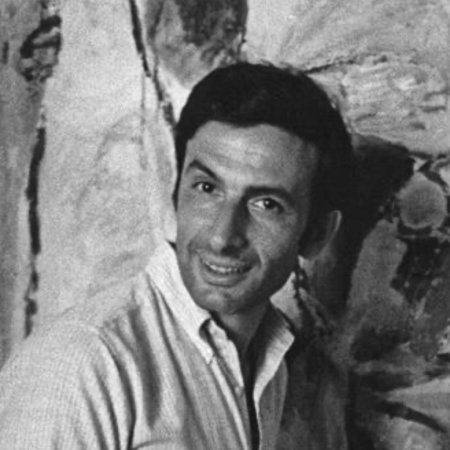
Albert Bitran
(1931, Istanbul – 2018, Paris)
Albert Bitran developed a distinctive artistic practice that brought together geometric structure and lyrical expression, positioning his work within the Paris-centered modernist production of the second half of the 20th century. Born in Istanbul, he moved to Paris in 1949 to study architecture, but soon abandoned this path to devote himself entirely to painting.
Working within the international artistic milieu of Paris, and in the context of the École de Paris, Bitran initially constructed his visual language through geometric abstraction. Over time, this language evolved into a more fluid and intuitive surface. His approach—articulated through relationships of color, texture, and layering—creates a visual field in which figurative associations dissolve within an abstract structure.
With his first exhibition at Galerie Arnaud in 1951, Bitran entered the international art scene, later participating in significant platforms such as the Salon des Réalités Nouvelles and the Salon de Mai. His works are included in major international collections, notably at the Centre Pompidou and the Musée d’Art Moderne de Paris.
Bitran’s practice extended beyond painting into sculpture and ceramics, expanding his experimental engagement with material and surface. This multidimensional approach reflects an artistic trajectory defined not by a fixed style, but by a continuously evolving field of expression within modernism.
Living and working in Paris, the artist passed away in the same city in 2018. Bitran’s oeuvre endures as a timeless abstract language, sustained through the balance he established between structure and intuition, control and fluidity.