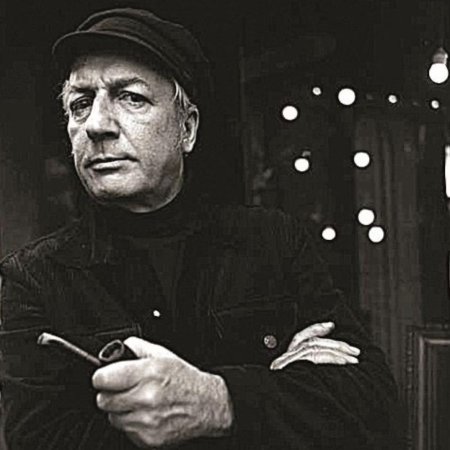
Avni Arbaş
(1919 – 2013)
Avni Arbaş was born in Istanbul in 1919. He studied in the Painting Department of the Istanbul State Academy of Fine Arts (now Mimar Sinan Fine Arts University), working in the studio of Leopold Lévy. In 1946, he moved to Paris, where he lived until 1976.
During his early years in Paris, Arbaş continued to produce works rooted in the “social realist” approach he had developed in Istanbul, depicting Anatolian life and its people. By the 1960s, however, he increasingly engaged with abstraction, particularly through landscape studies and object compositions, which became central concerns in his painting.
It can be said that the dominant artistic paradigms and formal tendencies of the period did not deeply captivate Arbaş. Instead, he maintained an independent pictorial practice grounded in a measured, expressive approach connected to nature and lived experience. His work reflects a sustained engagement with the formal necessities of painting—surface, texture, and internal plasticity—while emphasizing a strong aesthetic presence.
The somber atmosphere created through dark tonalities, combined with the warm color effects enveloping the figure and its bold formal accents, gives rise to Arbaş’s distinctive sense of humor and irony. The powerful, almost epic impact of his work emerges from this synthesis and its inherent unity.
His works are held in various international institutions, including the Picasso Museum Antibes and the Jordan National Gallery of Fine Arts, as well as in numerous museums and private collections in Turkey. The artist passed away in 2013.