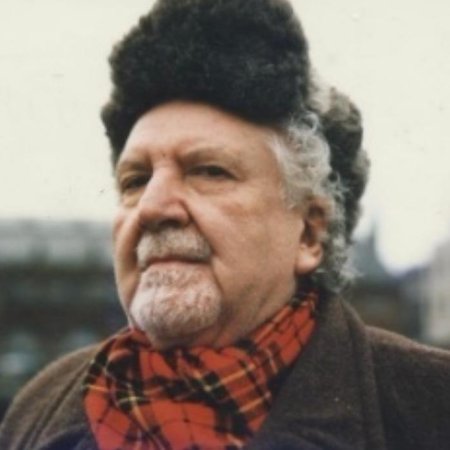
Nejad Melih Devrim
(1923, Istanbul – 1995, Nowy Sącz)
Nejad Melih Devrim is regarded as one of the most distinctive representatives of the modernist trajectory established between Turkey and Europe in the mid-20th century. His painting is shaped less by geographic belonging than by visual and intellectual continuities. From an early age, he was formed within a rich cultural milieu—through his mother Fahrelnissa Zeid and his father İzzet Melih Devrim—which fostered a multilayered aesthetic sensibility.
His education at the Istanbul State Academy of Fine Arts, in the studio of Leopold Lévy, shaped his early interest in formal discipline and structural composition. At the same time, the abstract language of Islamic art, the aesthetics of calligraphy, and the mosaics of Hagia Sophia situated this structural approach within a timeless network of visual references.
His move to Paris in 1946 marked a decisive turning point in his practice. His studies of the stained glass of Chartres Cathedral and the mosaics of Ravenna deepened his understanding of the relationship between light, surface, and rhythm. Within the context of the Paris School, his work consolidated his position within international modernism. The black-and-white compositions that emerged in the 1950s reflect a search for geometric tension and balance.
From the 1960s onward, his engagement with Abstract Expressionism should be understood not as direct alignment, but as a space of personal transformation. As color gained autonomy, Devrim fragmented and reconstituted the pictorial surface, developing a painterly language grounded in gesture, rhythm, and layering. His contacts in New York and across Europe formed the spatial backdrop of this evolution.
His collaborations with Tristan Tzara and Paul Éluard further demonstrate that his practice operated not only within a plastic domain, but also within a poetic and intellectual framework.
Spending the final years of his life in Poland, Devrim passed away in 1995 in Nowy Sącz.
Devrim’s practice can be read through the fluid relationships he established between East and West, tradition and modernity, structure and gesture. In this sense, his work is best understood not as a fixed style, but as a continuously evolving field of visual thought.